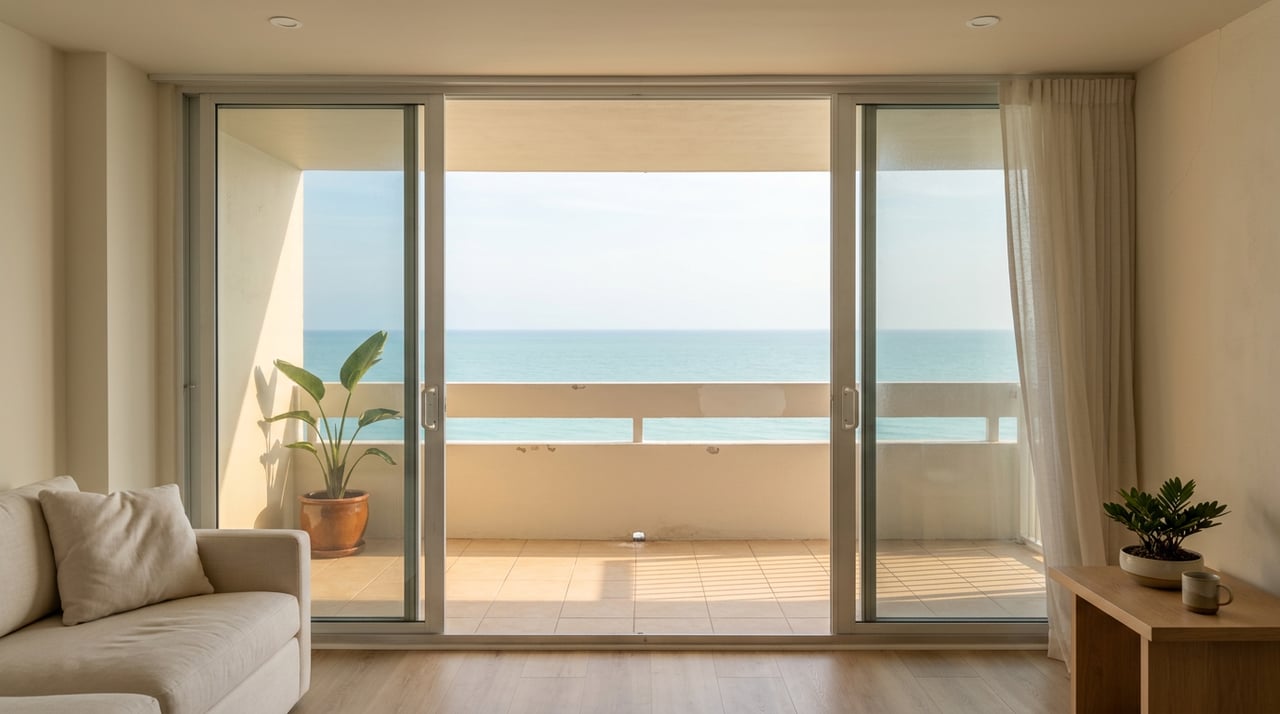
Buying a Cocoa Beach Condo in 2026: What the Reserve Study Tells You That the Listing Won't
August 6, 2026
August 6, 2026
A pristine oceanfront tower with no scaffolding in sight can be the riskier buy. A building wrapped in mesh with workers on the balconies can be the safer one. In Cocoa Beach in 2026, the visual cues most buyers use to judge a condo have inverted, and the reason is buried in a document called the Structural Integrity Reserve Study.
Almost every condo building in Cocoa Beach sits within three miles of the Atlantic, which means the 25-year milestone-inspection trigger has already fired for most of them. The diligence question is no longer whether a building has been inspected. It is where the building is in its repair-and-funding cycle, and whether the seller has priced that position honestly. A building that has completed its milestone inspection, adopted a SIRS, paid its assessments, and is halfway through concrete restoration is a fundamentally different asset than a building that has done none of those things, even if the two units look identical online.
The inspection is required for buildings three stories or more in height once the building reaches 30 years from its certificate of occupancy, or 25 years if the building is within three miles of the coastline. Cocoa Beach's oceanfront corridor along Ocean Beach Boulevard and North Atlantic Avenue is a narrow barrier island, so the 25-year clock, not the 30-year one, is the operative rule. Buildings from the 1970s and 1980s that make up the bulk of the market are all inside the window.
After the initial inspection, milestone inspections recur every 10 years. The inspection occurs in two possible phases. Phase 1 is a visual examination. If the architect or engineer identifies signs of substantial structural deterioration, Phase 2 follows: destructive or non-destructive testing to characterize the extent and source of the issue. A Phase 2 result is not a reason to walk. It is a reason to read the report and ask what work has been authorized, budgeted, and scheduled.
The reserve study is a math document. Three figures, per component: remaining useful life, replacement cost, current reserve balance. Divide balance by what a full funding schedule would require and you get a funding percentage. Here is the framework a serious buyer uses.
| Funding level for a component with <10 years of life | What it signals | What a buyer does |
|---|---|---|
| 90 to 100 percent | Association is on schedule | Proceed on standard terms |
| 70 to 89 percent | Watch item, monitor for special assessment | Ask the board about the funding plan for the next two budget cycles |
| 50 to 69 percent | Warning | Request a price concession or seller-funded escrow equal to the projected shortfall |
| Below 50 percent | Serious | Negotiate hard on price, structure a credit at closing, or walk |
The above thresholds are consistent with how Space Coast agents active in the condo market read a SIRS in 2026. Under Florida Statute 718.112(2)(g), associations can no longer waive reserves for the eight mandatory SIRS components: roof, load-bearing walls and primary structural members, fire protection, plumbing, electrical, waterproofing, windows and exterior doors, and any other item with a deferred maintenance or replacement cost exceeding a set threshold. The ban on waiving reserves for these components took effect for budgets adopted after December 31, 2024. Full reserve funding must begin by January 1, 2026. The grace period is over. If a Cocoa Beach association is still funding at 40 percent on a 1980s-era roof, the assessment is a when, not an if.
HB 913 raised the statutory base threshold from $10,000 to $25,000 and required annual inflation adjustments beginning in 2026. DBPR set the official 2026 threshold at $25,675. That threshold governs the SIRS catch-all category, not the eight named structural items.
Beginning January 1, 2026, HB 1021 requires condo associations with 25 or more units to provide access to documents on their website or app. Previously, this requirement applied to condo associations with 150 or more units. A Cocoa Beach association that cannot produce a document portal in 2026 is telling you something before you have even asked a question.
A building actively spending reserve money on identified repairs is not a red flag. A building whose minutes never mention repairs, whose SIRS shows 30 percent funding, and whose dues have not moved in three years is the red flag.
Cocoa Beach is small, and the buildings talk. A partial map of what is visible on the barrier island right now:
A buyer touring three units in the same week will see three different chapters of the same story. Pricing has to reflect which chapter.
More than 1,400 Florida condo buildings are currently on Fannie Mae's restricted list. A restricted building is classified as "non-warrantable," which means conventional financing, the standard Fannie Mae or Freddie Mac loan that most buyers use, is unavailable. If you are buying in a non-warrantable building, your financing options narrow significantly: you will typically need a portfolio loan, a non-QM product, or jumbo financing, usually at a higher rate with different qualification criteria.
That has direct pricing consequences. A non-warrantable classification cuts the buyer pool to cash purchasers and portfolio-loan borrowers, which in Cocoa Beach already skews the market toward one type of buyer. In the most recent Cocoa Beach reporting period, 15 cash transactions closed, up 400 percent from the prior year, with 60 percent of all condo purchases in cash, indicating that retirees and investors dominate the market, largely unbothered by mortgage rates.
Looking further ahead, on March 18, 2026, Fannie Mae and Freddie Mac issued significant updates to their condominium project eligibility standards, and the most consequential change is the increase in the required reserve allocation from 10 percent to 15 percent of total annual budgeted assessment income, effective January 4, 2027. Associations that are only now catching up to 10 percent will need to raise dues, assess, or borrow to reach 15 percent. Buyers under contract for a January 2027 closing should ask the board what its plan is.
Cocoa Beach condos in early 2026 are a buyer's market by any reasonable measure. Inventory is up, days on market are up, and price discipline has returned. The average time a condo sits on the market is now over 100 days. The median sale price is settling in the low-to-mid $300,000s, sellers are accepting prices 4 to 7 percent under list, and some are covering closing costs or funding repairs to close deals.
That gives an informed buyer leverage. If the SIRS shows a component at 55 percent funded with seven years of remaining life, the number you are negotiating against is not just list price. It is list price minus your share of the projected shortfall.
Special assessments do not disappear at the closing table. In Florida, special assessments are typically paid off at closing from the seller's proceeds, unless the contract specifies otherwise. "Unless the contract specifies otherwise" is where deals get lost. If the assessment has been levied but not yet due on a payment schedule, and the contract is silent, the buyer can end up holding the unpaid installments. Get the escrow language right at contract signing, not at the final walk-through.
Buyers also have a statutory unwind period. The buyer has a statutory three-day right of rescission, or 15 days for some resale situations, after receiving the required condo documents. That window is where the SIRS and milestone report get read, and where informed buyers renegotiate or exit cleanly.
If the seller says the building has "no assessments," is that enough? No. Confirm in writing whether there are pending assessments, whether the board has discussed an assessment in minutes, and whether reserves are on the baseline funding schedule. The Structural Integrity Reserve Study must reflect the milestone inspection findings and include a baseline funding plan where reserves never fall below zero.
What if the building is brand-new? The SIRS still applies. It applies to any building three stories or taller, no matter how new. The SIRS mandate is triggered by building height, not age, so a condo finished in 2026 still needs a SIRS on file. The milestone-inspection age trigger is a separate requirement, and it will not hit a new building for decades.
Can the association simply borrow to fund reserves? Yes, and many are. The law allows associations to fund reserves through loans, lines of credit, or special assessments, not just monthly dues. That flexibility is a double-edged sword. A loan smooths the cash-flow shock for current owners but leaves the debt on the association's books, and a lender reviewing the building's finances will see it.
The best Cocoa Beach condo purchase this year is often the one that looks the least glamorous during showings. Scaffolding, a recent assessment, and a fresh SIRS on the association's website are signs of an association doing the work. A quiet, cosmetically perfect building with a thin reserve schedule and a board that has not met in six months is the one that will surprise you.
If you are evaluating a specific building or already under contract and want a second read on the reserve study, the milestone report, and how the numbers should shape your offer or your escrow language, Isabel Castro is glad to walk through the documents with you in English or Spanish. Let's Connect.
Stay up to date on the latest real estate trends.
From luxury homebuyers and relocation clients to sellers and investors, Isabel delivers a refined real estate experience built on local expertise, thoughtful guidance, and trusted representation.

ISABEL CASTRO
1980 N Atlantic Ave Ste 304 Cocoa Beach, FL 32932