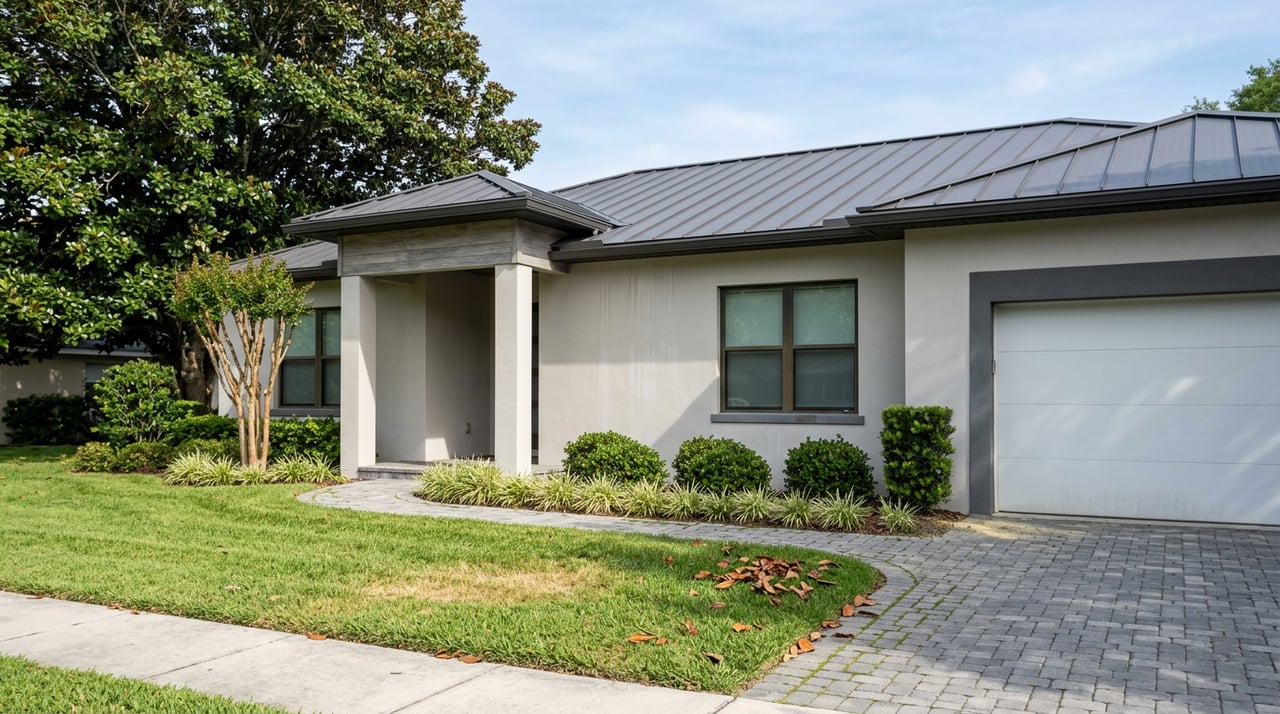
Viera CDD Fees vs HOA Costs in Viera East and West
August 13, 2026
August 13, 2026
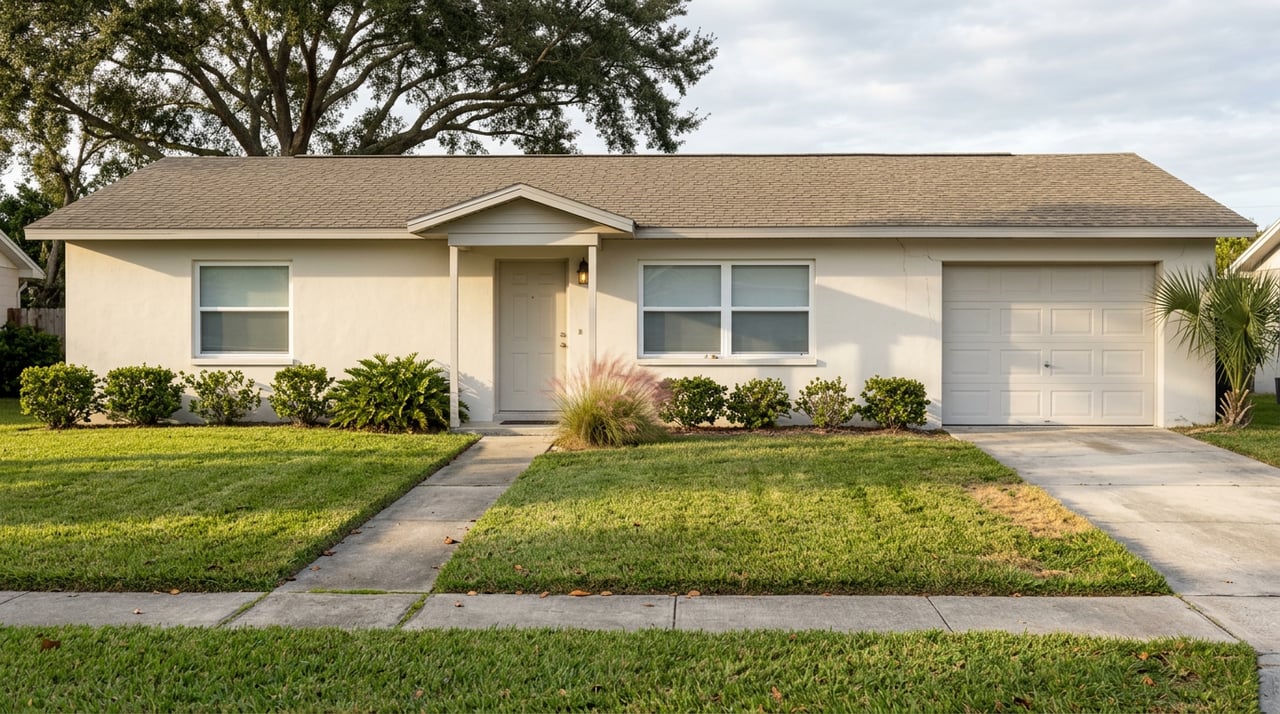
Two homes, one afternoon, both in Viera. The first sits on a mature lot east of I-95, oak canopy over the driveway, listed in the mid-$300,000s. The second is twenty minutes away in a newer phase west of the interstate, same square footage, same three bedrooms, priced at nearly double. A buyer touring both in the same day could reasonably conclude that Viera West is simply the nicer half of town and leave it there.
That conclusion skips a line item that never shows up in the listing photos or the sale price: whether the parcel sits inside a Community Development District, and what that means for the check the buyer writes every year for as long as they own the home.
The headline numbers are real. As of November 2025, the median sale price for a home in Viera East was $355,000, down 8.3 percent from the year before. As of March 2026, the median in Viera West was $600,000, up 9.7 percent year over year. That is a $245,000 gap between two halves of the same master-planned community, separated mainly by which side of Interstate 95 the address falls on.
The easy explanation is age and finish level. Viera East is the original section, built out over the past three decades with mature landscaping and, in many pockets, slightly larger lots. Viera West is newer construction, still actively building, with the floor plans and upgrade packages that come with recent permits. Both of those things are true and both matter.
But price per square foot tells a more complicated story. Viera East's median price per square foot was $235, up 10.8 percent year over year, even as the overall median price fell. Viera West's price per square foot was $261, down 3.5 percent even as the overall median rose. When the average price and the price per square foot move in opposite directions on both sides of the same community, something besides finish quality is doing part of the work.
That something is a Community Development District, a public financing tool created under Florida Statutes Chapter 190. A CDD is not a homeowners association. It is a special-purpose unit of local government, formed to issue bonds that pay for the roads, drainage systems, and amenities inside a new development before a single house is built. The Viera East Community Development District is one of these entities, governed by a board that starts under developer control and eventually transitions to elected residents as the community fills in.
Homeowners inside a CDD boundary repay that bond debt through an annual assessment, typically split into a debt-service portion and an operations and maintenance portion, both usually billed as a non-ad valorem line on the Brevard County property tax statement rather than folded into an HOA invoice. Debt-service assessments in Viera-area districts commonly run 20 to 30 years, tied to when the original bonds mature. The maintenance portion does not expire when the bonds are paid off. It continues for as long as the district operates and maintains its assets, and the board can adjust it year to year.
Put a number on it: typical CDD assessments in Viera run between $1,000 and $3,500 per year, depending on the sub-district and the home, which works out to roughly $80 to $300 a month stacked on top of whatever the HOA already charges. That range is wide enough to change a monthly budget by a meaningful margin, and it is the kind of number a portal's single "HOA fee" field was never built to capture.
Here is where the East versus West story gets messy in a useful way. Most newer Viera East and Viera West neighborhoods sit inside a CDD boundary. But older Viera East sections, along with some adjacent Suntree parcels, sit outside any CDD entirely, a legacy of when those phases were platted before the district structure was in place. Meanwhile, some of the newest Viera West product carries the heaviest debt-service load, because the bonds funding its roads and amenities are the youngest and furthest from being retired.
That means the cheaper-looking Viera East home a buyer tours on a Tuesday could be sitting entirely outside a CDD, with no assessment at all, while the pricier Viera West home down the road is several years into a 25-year bond repayment schedule. The $245,000 gap in median price is not purely a story about granite counters and newer roofs. Part of it reflects who already finished paying for their infrastructure and who is still paying for it monthly, on top of the mortgage.
A recent listing in Arrivas Village, a Viera Builders community in Viera West, makes the point plainly. The listing calls out "NO CDD fees" as a specific selling feature, alongside owned solar and a premium lot. That single phrase only works as a selling point if the buyer already assumes most comparable listings nearby do carry a CDD assessment. Sellers and their agents are already pricing this distinction into how they market a home. Buyers comparing median prices across a spreadsheet often are not.
| Viera East | Viera West | |
|---|---|---|
| Median sale price | $355,000 (Nov. 2025) | $600,000 (Mar. 2026) |
| Year-over-year change | Down 8.3% | Up 9.7% |
| Price per square foot | $235, up 10.8% YoY | $261, down 3.5% YoY |
| Typical CDD status | Mixed: newer phases inside CDD, older sections and some adjacent Suntree parcels outside | Mostly inside CDD, with some newer communities marketed as CDD-free |
| Typical CDD assessment (where applicable) | $1,000 to $3,500 per year | $1,000 to $3,500 per year |
The takeaway from that table is not that one side is cheaper. It is that the CDD status has to be checked address by address, because neither the East/West label nor the sale price reliably predicts it.
A $250-a-month CDD assessment does not sound dramatic in isolation. Multiplied across a 25-year bond term, it adds up to roughly $75,000 in nominal payments over the life of that assessment, a number that never appears on the closing disclosure as a single line but shapes the total cost of ownership every year the debt-service portion remains active. That is the real comparison a buyer choosing between a CDD-free Viera East home and a CDD-active Viera West home should be running, not just the difference between the two sale prices.
The way to check is not complicated, but it does take a specific document, not a guess:
None of this shows up automatically in a portal search filter. It shows up in a tax bill and a phone call.
Viera is still actively building, which means the CDD question is not a historical footnote, it is a live variable in every new phase coming online. Whole Foods is currently under construction at the corner of Stadium Parkway and Lake Andrew Drive, and Trader Joe's has pulled permits at The Avenues shopping center, both signs that retail is following rooftops westward. Next to the Costco that has been open for close to two years now, Viera Builders is developing Atalan Cove, a community of spec-built patio homes on smaller lots designed for faster move-in timelines. Every one of those new residential phases will be financed one of two ways: through a CDD bond that shows up on future owners' tax bills, or through costs the developer absorbs upfront and bakes into the sale price. Buyers touring new construction in 2026 are choosing between those two structures whether they realize it or not.
Does a CDD assessment ever go away? The debt-service portion typically ends once the bonds are paid off, usually 20 to 30 years from issuance. The operations and maintenance portion does not expire on the same schedule and can continue as long as the district maintains its assets.
If I buy a home with an existing CDD, do I inherit the previous owner's remaining balance? The assessment is tied to the property, not the person, so it transfers with the title. The recurring annual amount is typically prorated between buyer and seller at closing based on the closing date, similar to how property taxes are handled.
Is a CDD the same thing as an HOA? No. A CDD is a public special-purpose government entity created under Florida Statutes Chapter 190, while an HOA is a private association. Many Viera properties carry both, billed separately, covering different things.
Can I tell from a listing alone whether a home has a CDD? Not reliably. Some listings mention it explicitly, as the Arrivas Village example shows, but many do not. The property tax bill or a direct question to the district manager is the only way to confirm it before writing an offer.
Comparing a Viera East listing to a Viera West listing on price alone leaves out the part of the math that shows up every November on the tax bill. If you are weighing both sides of Viera, or trying to figure out what a specific address actually costs to own long term, Isabel A Castro can help you pull the real numbers before you get attached to a house. Let's Connect.
Stay up to date on the latest real estate trends.
From luxury homebuyers and relocation clients to sellers and investors, Isabel delivers a refined real estate experience built on local expertise, thoughtful guidance, and trusted representation.

ISABEL CASTRO
1980 N Atlantic Ave Ste 304 Cocoa Beach, FL 32932