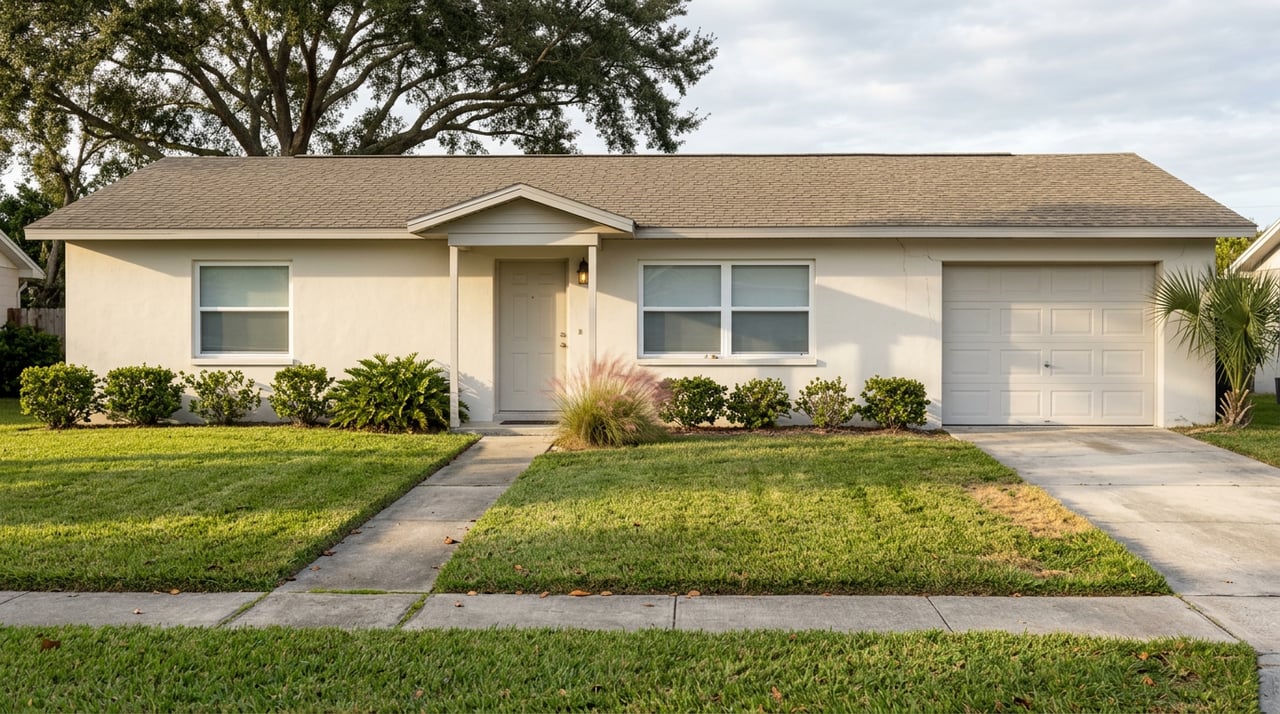
Palm Bay's Housing Market Has a Split Personality in 2026, and a 1959 Land Deal Explains Why
August 13, 2026
August 13, 2026
Pull up two market reports on Palm Bay in the same week and you'll get two different cities. One tells you homes are moving fast, offers are stacking up, and sellers hold the leverage. Another describes a buyer's market with price cuts on a third of active listings and homes sitting for three months. Same zip codes. Same season. Opposite conclusions.
This isn't a data error. It's a sign that "Palm Bay real estate" stopped being one market a while back, and most of the headline numbers you'll find on portals haven't caught up to that fact. Understanding why gets you closer to reading any single listing correctly, whether you're comparing move-up options, running numbers on a rental, or deciding what to list your own home at.
Here's what the reported numbers actually looked like at different points in 2026:
| Snapshot | Time window | Reported median sale price | Days on market | Market read |
|---|---|---|---|---|
| Early-year market report | January 2026 | $315,000 (down 3.1% year over year) | 78 to 90 days | Called a "buyer's market for the first time in five years" |
| Broker-reported MLS data | April 2026 | $289,900 | 75 days, down from 98 | Not labeled |
| Redfin | 3 months ending May 2026 | $320,000 (down 1.9% year over year) | 79 days | "Somewhat competitive" |
| Movoto | June 2026 | $349,900 | 94 days, down from 117 | Not labeled |
| Investor-focused market dashboard | July 2026 | $317,000 (6-month median) | Median listing age of 4 days | "Seller's market" |
None of these sources made an error. They're all measuring real transactions. What they're not doing is separating out what kind of home is behind each number, and that turns out to matter enormously in Palm Bay specifically.
Look closer at one broker's April 2026 breakdown and the split becomes visible. Median list price on single-family homes rose from $339,989 in April 2025 to $361,495 in April 2026. Condo median list price jumped even harder, from $170,000 to $279,390 over the same twelve months. Land held flat at $47,000. Three segments of the same city, moving in three different directions at once, while the blended "median sale price" for Palm Bay overall was reported as falling.
That's the tell. A single median can drop even while individual segments are appreciating, if the mix of what's actually closing shifts toward a cheaper or more plentiful category. In Palm Bay, that shifting category is new construction, and there's a specific, decades-old reason there's so much of it available to shift toward.
In 1959, General Development Corporation, working alongside Florida Canada and the Mackle Company, began platting a stretch of land into a planned community called Port Malabar, which later became part of Palm Bay. The company laid out thousands of individual residential lots, roads, and drainage, then sold parcels off in pieces for decades. General Development Corporation shut down in 1991 with much of that platted land still unbuilt. The remaining lots were auctioned off, and ownership scattered across thousands of individual buyers rather than staying concentrated with a single developer.
The practical effect, still visible today, is that Palm Bay has an unusual supply of small, already-platted, already-zoned single-family lots spread in ones and twos across the city instead of sitting in a handful of large undeveloped tracts. That's a very different starting point than a master-planned area where a developer controls thousands of contiguous acres and rolls out phases on its own schedule.
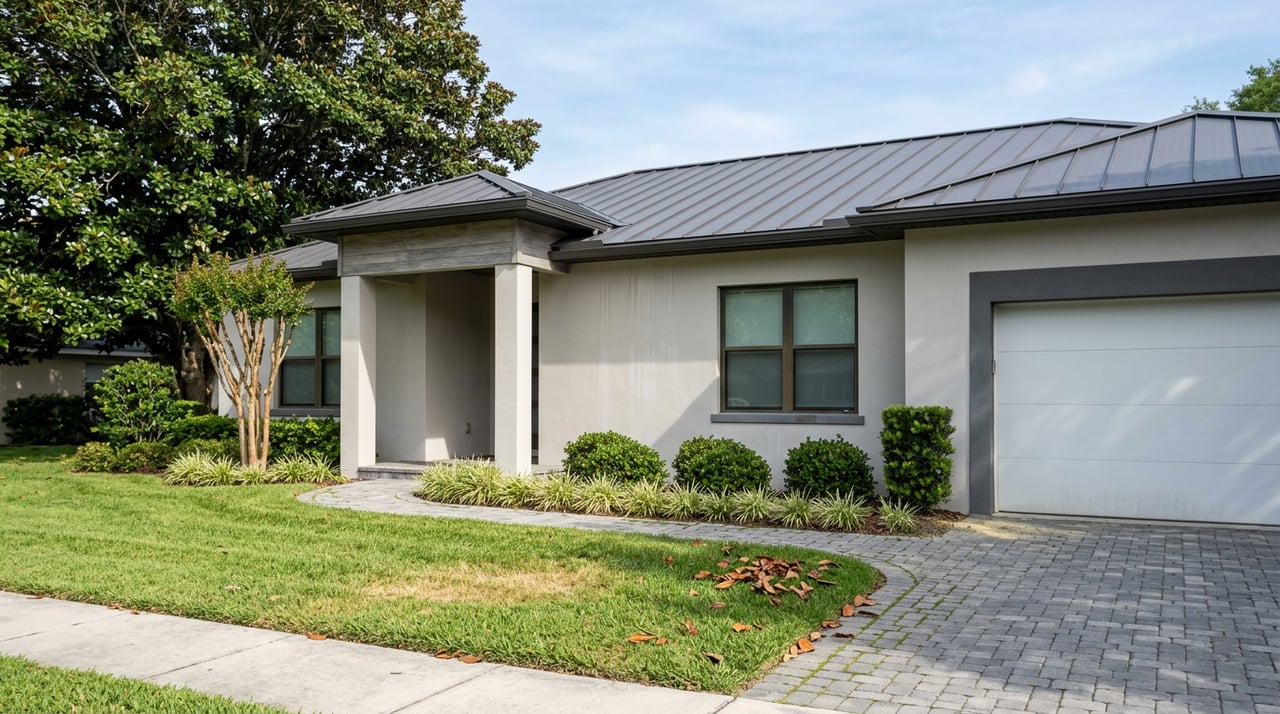
For national builders working in 2026, scattered platted lots are easier to acquire quietly, one at a time, without the large land assembly, rezoning, and infrastructure negotiations that a bigger master-planned community requires. As of mid-June 2026, active builders in Palm Bay included D.R. Horton, Holiday Builders, and Lennar, with roughly 79 new-construction homes listed across at least 10 communities, priced from about $235,000 to $669,900. Cypress Bay West Freedom had 30 new homes starting from $339,000. Reserve at Country Club Lakes Estates had 18 new homes starting from $309,900. K. Hovnanian and Maronda Homes were both active in the city as well, with Maronda marketing new construction on quarter-acre homesites at prices starting in the $279,000s.
That last detail is worth sitting with. Maronda's Palm Bay communities are advertised with no HOA or CDD fees at all. Compare that to a master-planned community elsewhere on the Space Coast, where a Community Development District under Florida Statute Chapter 190 typically finances roads, drainage, and amenities through a bond that gets repaid over decades on your property tax bill, plus separate HOA dues for day-to-day upkeep. Palm Bay's builders can skip that structure in many cases because the roads and lot lines were already platted sixty-five years ago. You're not paying to build the district. You're paying to build the house.
If new supply were landing into a market starved for housing, you'd expect rents to climb alongside it. That's not quite what happened. Rent reports from early 2026 put average Palm Bay rents between $1,444 and $1,542 depending on the source, with year-over-year changes ranging from a 1.5% decline to a 0.88% increase, essentially flat. Broken out by unit size, studios ran around $1,024, one-bedrooms $1,415, two-bedrooms $1,589, and three-bedrooms $1,929, and the city's overall rents sat about 12.7% above the Brevard County average.
Flat rents next to a wave of new supply is the signal that construction is currently arriving a bit ahead of absorption, at least for now. That doesn't mean demand has disappeared. Palm Bay's population was still reported growing at roughly 3.7% annually through early 2026, and Redfin's migration data for the first quarter of 2026 showed 57% of Palm Bay home shoppers searching to stay within the metro, with Orlando the single largest source of out-of-metro buyer interest, followed by Miami and Washington. People are still coming. The pipeline of new units, estimated at around 30,000 in one early-2026 accounting, is simply large enough that it's arriving faster than rents can react to it.
Statewide, Florida's post-Surfside condo reforms under SB 4-D require structural inspections, reserve studies, and mandatory reserve funding for condo associations. As of early 2026, that had triggered special assessments ranging from $134,000 to $400,000 per unit in older high-rise buildings around the state, alongside condo association insurance running $377 to $438 a month. Roughly 51% of condo transactions statewide were cash deals during that same period, as lenders grew cautious about buildings carrying that kind of exposure.
A buyer looking at a Palm Bay condo is not looking at the same risk as a buyer looking at an aging oceanfront tower thirty miles up the coast.
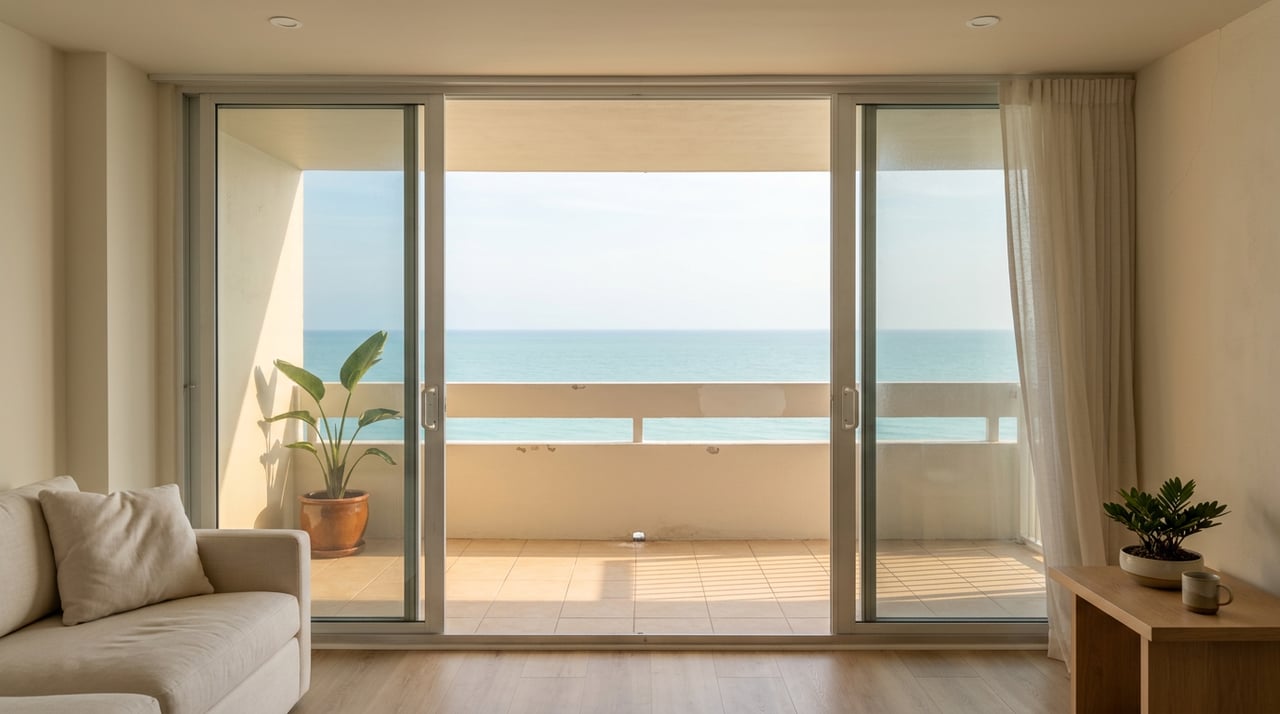
Palm Bay's condo stock is mostly newer, low-rise construction. It doesn't carry the aging high-rise inventory driving special assessments in parts of South Florida, Fort Lauderdale, and even some Cocoa Beach buildings. That's real insulation, but it isn't a reason to skip due diligence. Every condo purchase in Florida still deserves a current reserve study and a look at the building's age and maintenance history before you write an offer.
None of this means the median price is useless. It means it can't be compared across listings without first sorting resale from new construction. Before anchoring an offer or a listing price to "the Palm Bay median," find out which segment the comparable sales actually belong to. Ask specifically whether a new-construction community carries a CDD or HOA, since Palm Bay is one of the few Space Coast markets where the answer is sometimes neither. For any condo, request the current reserve study regardless of the building's age. And treat days-on-market figures with the same segmentation in mind, since a four-day median listing age in one tracker's July snapshot and a 78-to-90-day figure in another's January read aren't necessarily describing the same kind of home.
Is Palm Bay a buyer's market or a seller's market right now? It depends on which slice of inventory you're comparing. Resale homes have shown longer time on market and more price cuts through parts of 2026, while tighter pending-to-active ratios in mid-year snapshots suggest faster-moving segments elsewhere in the market. Ask for the specific comps behind any label before you rely on it.
Are new-construction homes in Palm Bay actually cheaper than resale? Not automatically. New-construction pricing as of mid-2026 ranged from about $235,000 to $669,900 across active communities, overlapping heavily with resale pricing. What new construction typically adds is a builder warranty and current building codes, which resale homes may not carry.
Does buying new construction in Palm Bay mean I won't pay HOA or CDD fees? Sometimes, not always. Some communities, including several from Maronda Homes, are marketed with no HOA or CDD fees due to Palm Bay's platted-lot history. Other new communities do carry standard HOA dues. Confirm the specific structure for any community before you compare its cost to another.
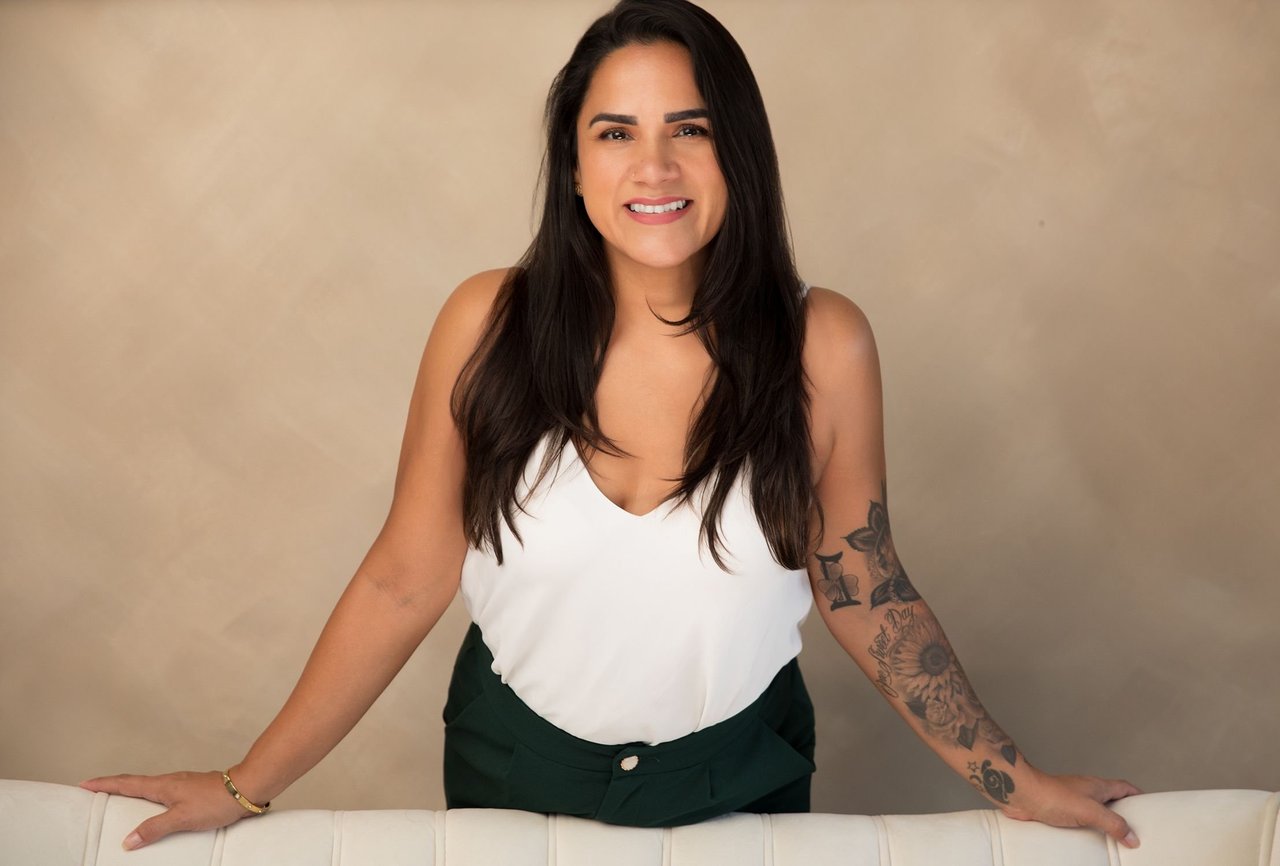
If you're weighing a Palm Bay purchase, a sale, or how the city's mix of resale and new construction fits into a broader Space Coast search, I'm happy to walk through the specific comps behind any number you've seen. Isabel A Castro works with buyers, sellers, and investors across Brevard County in both English and Spanish. Let's Connect whenever you're ready to look at the details behind the headline.
Stay up to date on the latest real estate trends.
From luxury homebuyers and relocation clients to sellers and investors, Isabel delivers a refined real estate experience built on local expertise, thoughtful guidance, and trusted representation.
ISABEL CASTRO
1980 N Atlantic Ave Ste 304 Cocoa Beach, FL 32932